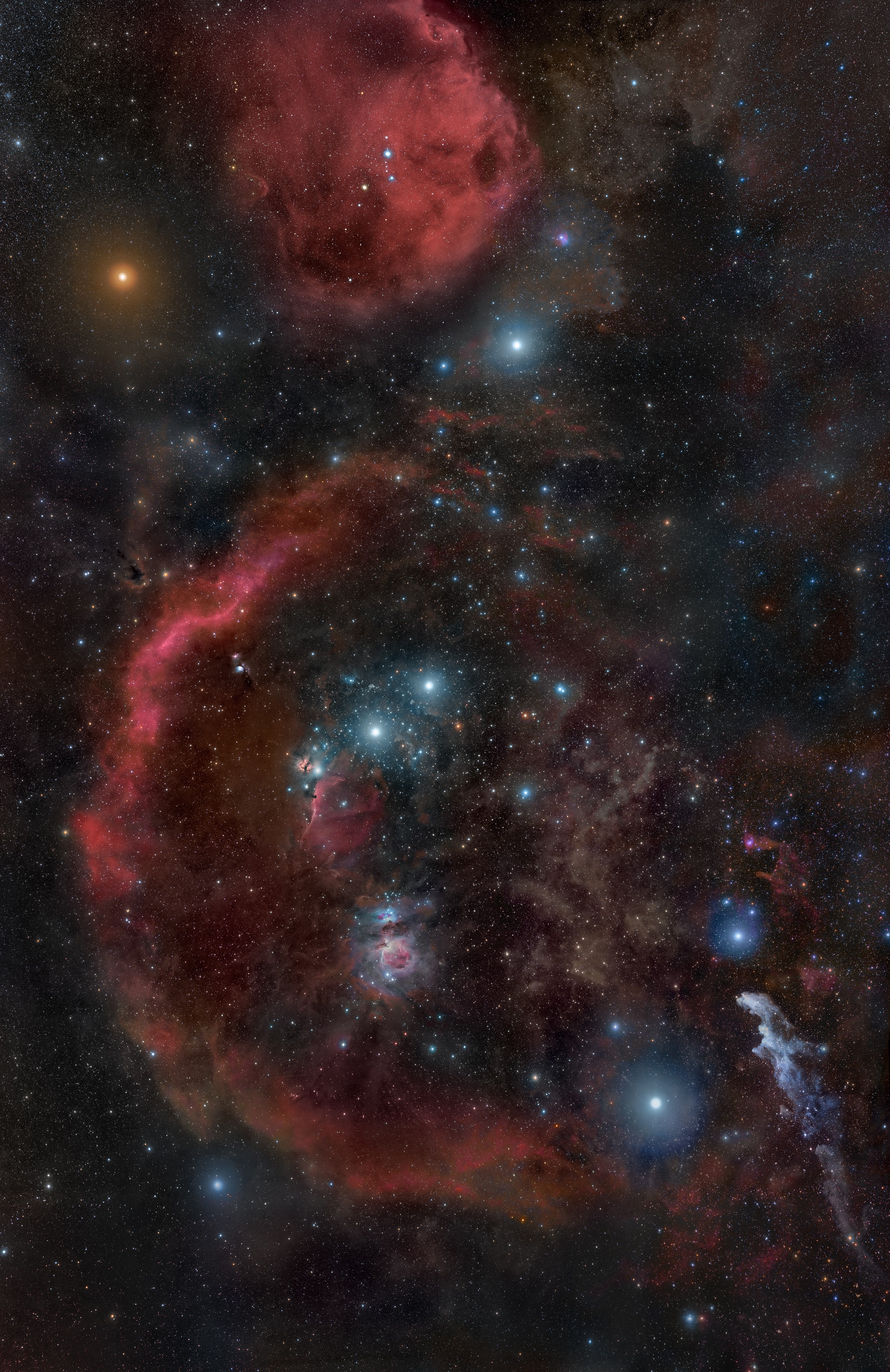
Winter: Orion and the long nights
Winter rewards northern observers with the longest nights of the year. Orion dominates the southern evening sky, its three belt stars pointing toward Sirius, the brightest star in the night. Below the belt, a faint smudge marks the Orion Nebula, a star-forming region visible in binoculars and a fine target for any telescope.
The cold carries a real penalty in comfort but a benefit in steadiness: crisp winter air can deliver some of the year's sharpest views once optics have cooled.

Spring: reaching beyond the Milky Way
As Orion sinks westward, the evening sky turns toward regions away from our galaxy's crowded plane. With the Milky Way's dust out of the way, distant galaxies become the spring theme for observers with a telescope and a dark site. The Big Dipper rides high, a reliable signpost for finding Polaris and the fainter patterns around it.
Faint spring galaxies appear only to a dark-adapted eye. Avoid white light for at least twenty minutes, use a dim red light for charts, and view from the darkest site you can reach.
Summer: the Milky Way overhead
Short summer nights are the trade-off for the year's richest views of our own galaxy. When darkness finally falls, the Milky Way arches overhead, densest toward its centre low in the south. Bright summer stars form a large triangle high in the sky, a useful frame for sweeping with binoculars through dense star fields.

Autumn: Andromeda returns
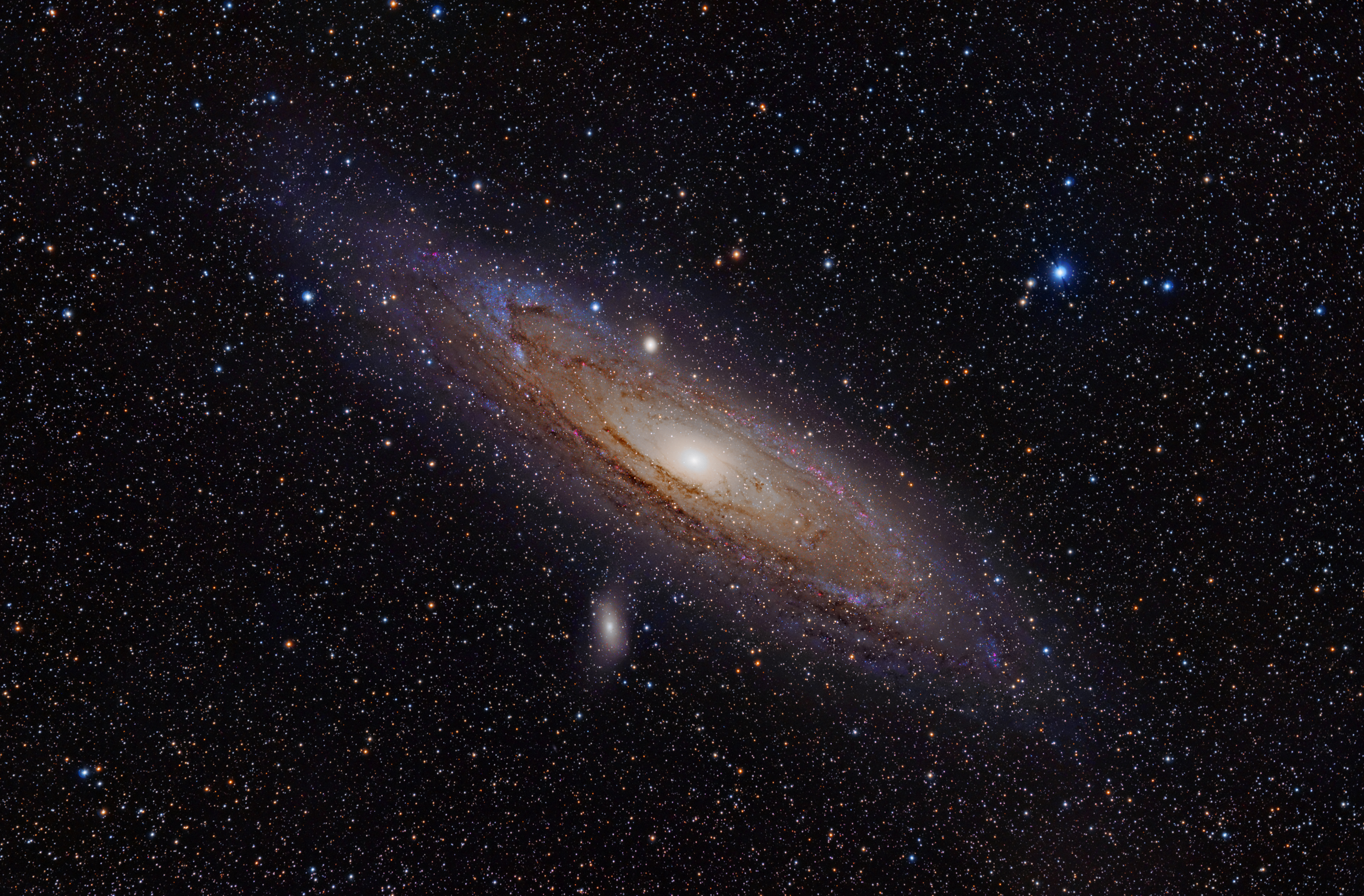
Autumn brings the Andromeda Galaxy back to convenient evening view. Under dark skies it is faintly visible to the unaided eye as an elongated smudge — the most distant object most people can see without optical aid. Binoculars show its bright core, and a telescope at low power frames it best.
A northern bonus: the aurora
Beyond the seasonal constellations, high-latitude observers across Canada have a chance to see the aurora borealis when solar activity is elevated. It can appear in any season, favouring dark hours away from city light. Unlike the fixed stars, the aurora is unpredictable night to night, so it rewards patience and a clear northern horizon.

Planning by season
| Season | Highlight | Best tool |
|---|---|---|
| Winter | Orion and its nebula | Any telescope or binoculars |
| Spring | Distant galaxies | Telescope, dark site |
| Summer | Milky Way star fields | Binoculars |
| Autumn | Andromeda Galaxy | Naked eye to telescope |
For current sky events and observing programmes, consult established resources such as the Royal Astronomical Society of Canada and NASA Science.